
Last updated October 31, 2026
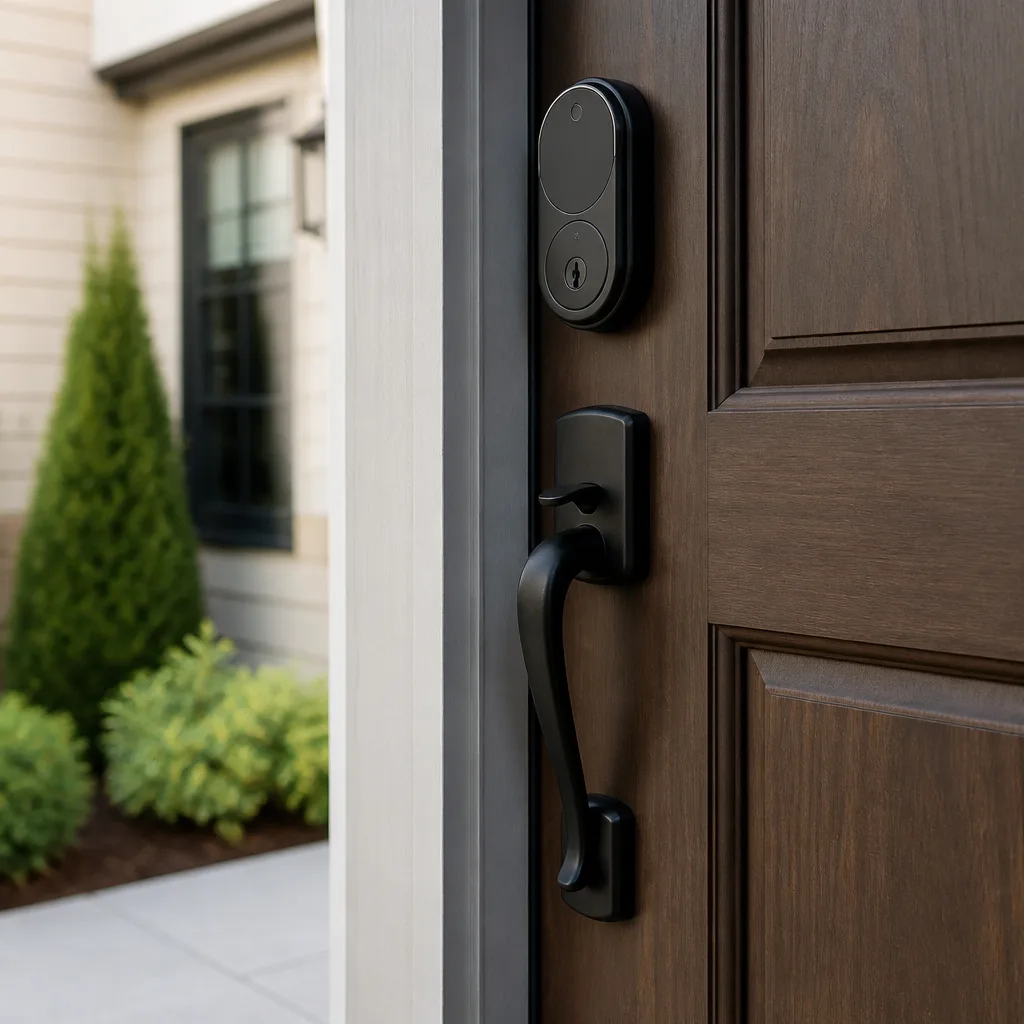 Smart locks
 House lockouts
 Re-keying
 Deadbolt upgrades
 Schlage
 Kwikset
 Car keys & fobs
Non-destructive entry first, always - and we re-key Schlage, Kwikset, and Baldwin locks on the spot while you watch
You get a price before we start. It does not change when we arrive. No surprises.
Get your free estimateLocksmith Permits, Codes & Inspections in IL: What You Need to Know
Most homeowners assume the locksmith handles any required permits. In Illinois, that assumption can void your property insurance or put you in violation of Chicago’s building code, specifically when egress or fire-rated hardware is involved. The reality is that Illinois regulates locksmiths through the Department of Financial and Professional Regulation (DFPR), but that license covers the person doing the work, not the work itself. When the job crosses from swapping a deadbolt into commercial hardware, access control, or fire door components, a separate set of building permits and code inspections kicks in. And here’s the part almost nobody tells you: the property owner, not the contractor, is often the one holding the liability bag. This guide walks through exactly where those lines are drawn, how to verify a locksmith’s standing in under two minutes, and what Chicago homeowners need to know; for more guides & resources, see our blog.specific triggers you need to know before you let anyone touch your hardware.
Quick Answer
In Illinois, residential lock changes and rekeying at single-family homes generally do not require a local building permit. However, any work involving fire-rated doors, egress hardware, commercial properties, multi-unit residential buildings, or access control systems in Chicago may trigger building permit and inspection requirements under the Chicago Building Code, and the property owner carries liability for unpermitted work. Homeowners should confirm DFPR licensure for the locksmith and check with the Chicago Department of Buildings before authorizing any hardware change on a fire or egress door.
Styles & brands we work with
Table of Contents
- What Illinois DFPR Licensing Actually Covers (and How to Verify in Under Two Minutes)
- When Chicago Building Permits Are Required for Lock Work
- Fire Egress Compliance: The Code Section Most People Overlook
- ADA Hardware Requirements for Chicago Commercial and Mixed-Use Buildings
- Who Carries Liability When Unpermitted Lock Work Causes a Violation
- How to Protect Yourself Before Any Work Starts
- Common Mistakes to Avoid
- When to Call a Professional
What Illinois DFPR Licensing Actually Covers (and How to Verify in Under Two Minutes)
The Illinois Locksmith Act, enforced by the DFPR, requires anyone performing locksmith services for compensation to hold a locksmith license. That includes key cutting, lock installation, rekeying, lockout services, and access control work. The license signals that the individual passed a background check and met the state’s training standards. But here’s what it does not cover: building permits, fire code compliance, or ADA hardware requirements. A licensed locksmith can absolutely install hardware that violates the Chicago Building Code, and the license doesn’t protect you from that violation.
Verifying a locksmith’s DFPR standing takes less than two minutes. The DFPR maintains an online license lookup system that anyone can use without creating an account. Go to the IDFPR license lookup portal, select “Locksmith” from the professional dropdown, and enter the name or license number. The result shows whether the license is active and whether any disciplinary actions are on file.
- Visit the Illinois DFPR online license lookup page.
- Select “Locksmith” as the profession.
- Enter the individual’s name or license number.
- Check the status: Active is good, anything else is a red flag.
- Note any disciplinary actions listed.
In our experience across Chicago’s residential and commercial market, the DFPR check is the single fastest way to separate legitimate pros from flash-in-the-pan operators, though as our Locksmith Warning Signs: A Chicago Homeowner’s Reference Guide explains, there are other red flags to watch for. We have walked into more than a few apartments in Lakeview and Rogers Park where the previous locksmith was unlicensed, and the hardware told the story: mismatched screws, misaligned strikes, deadbolts that bound against the frame. A license doesn’t guarantee quality, but it filters out the worst of the worst before they touch your door.
Beyond the state license, some locksmiths carry certification in high-security platforms like Medeco, Mul-T-Lock, and Abloy. These are manufacturer-level credentials that require specific training, and they matter if you’re installing restricted keyway systems or high-security cylinders. Most locksmiths in the Chicago market are fluent in consumer-grade Schlage and Kwikset. Far fewer are qualified to work on high-security brands most locksmiths don’t stock or service.
When Chicago Building Permits Are Required for Lock Work
For a single-family home or a standard condominium unit, replacing a doorknob, deadbolt, or lock cylinder does not require a Chicago building permit. The city treats this as routine hardware replacement, similar to swapping a faucet. The permit requirement changes when you touch specific categories of doors and hardware. Chicago’s building permit rules are clear that any modification to fire-rated assemblies, exit hardware, or access control systems requires review.
Here are the specific triggers most Chicagoans don’t know about:
- Fire-rated doors: If the door carries a fire rating label (common in multi-unit residential buildings, stairwells, corridors, and commercial spaces), any hardware change that alters the original door specification requires a permit. This includes swapping a lever for a knob, replacing a closer, or changing the latch type.
- Egress hardware: Panic bars, push bars, exit devices, and electromagnetic locks tied to fire alarm systems fall under egress code. Modifying these without a permit is a violation, even if the hardware works perfectly.
- Access control systems: Card readers, keypads, electric strikes, and fob systems in commercial or multi-unit buildings trigger permit review because they affect building ingress and egress.
- Multi-unit residential buildings (3+ units): Chicago treats these buildings differently than single-family homes. Common area door hardware, main entry systems, and anything that touches a fire-rated corridor door falls under commercial code.
- Interconnecting hardware with fire alarms: If your lock is electrically connected to the building’s fire alarm system, any modification requires a permit because it affects life safety systems.
The Chicago Department of Buildings offers an easy permit lookup through the city’s online portal. If in doubt, call the DOB and describe the scope of work. The conversation takes ten minutes and can save the building owner tens of thousands in code violation fines.
Fire Egress Compliance: The Code Section Most People Overlook
The Illinois Fire Code and the Chicago Building Code both treat doors along the path of egress as life safety components, not architectural details. A door in a stairwell, a corridor door in a walk-up apartment building, or the rear door of a restaurant are all governed by specific hardware requirements. The most common violation we see in Chicago residential and commercial buildings, as detailed in our Seasonal Locksmith Care for Chicago: Year-Round Homeowner’s Guide, is a lock that requires a key to exit. Unless the building predates certain exemptions and has not been renovated, keyed egress is almost always a violation.
Fire egress code requirements for multi-unit residential and commercial doors in Chicago include:
- Single-motion egress: Occupants must be able to exit with a single motion: one push, one lever turn, one twist. No keys, no tools, no special knowledge.
- No double-cylinder deadbolts on egress paths: A deadbolt that requires a key on the inside is forbidden on any door along the path of egress. We regularly see this in Chicago three-flats, where a previous owner installed a double-cylinder deadbolt on the rear door “for security.” That deadbolt is a fire code violation and a genuine life safety hazard. If there is a fire, a panicking occupant with no key at hand is trapped.
- Panic hardware requirements: Assembly occupancies (restaurants, bars, theaters, churches) and certain educational buildings require panic hardware: a push bar that releases the latch across the full width of the door.
- Self-closing and latching requirements: Fire-rated doors must be self-closing and self-latching. If the latch doesn’t engage, the fire rating is compromised.
- Hardware must match the door’s fire rating: A 90-minute fire door requires 90-minute-rated hardware. Swapping in an unrated deadbolt on a rated door voids the rating.
- Lever handles, not knobs: Round doorknobs require tight grasping and twisting, which fails ADA standards. Lever handles are required on all doors along accessible routes in covered buildings.
- Maximum opening force: Interior accessible doors must open with no more than 5 pounds of force. A heavy-duty commercial closer that requires a shoulder push to open is a violation.
- Hardware placement height: Door hardware must be mounted between 34 and 48 inches above the finished floor. This is often overlooked when retrofitting older Chicago buildings.
- Keyless egress from accessible spaces: Any door between an accessible space and the exterior must not require a key, tool, or special knowledge to operate from the egress side.
- Access control systems must accommodate accessibility: Card readers and keypads must be mounted at accessible heights and must not require special dexterity to operate.
- Code violation exists. An inspector, a complaint, or an incident brings the violation to light.
- City enforcement targets the property owner. The Chicago Department of Buildings issues the violation to the owner of record, not the contractor who did the work.
- Insurance review begins. If a loss event occurs, the insurer’s adjuster examines whether the hardware met code at the time of the loss.
- Claim reduction or denial. If the unpermitted work contributed to the loss, the insurer has grounds to reduce or deny the claim.
- Owner’s recourse is limited. The owner may attempt to recover damages from the locksmith, but that requires proving negligence or breach of contract in court, a slow and expensive process.
- Determine the door type. Is the door on a fire-rated assembly? Is it on the path of egress? Is it in a multi-unit building? If any answer is yes, treat the work as regulated.
- Check the Valor Locksmith home guide to lock types and applications if you are unsure what hardware category your situation falls into.
- Verify the locksmith’s DFPR license using the online lookup tool. Do this before you schedule, not after you are standing in the doorway.
- Ask the locksmith directly whether the work triggers a Chicago building permit. A competent professional will give you a direct answer, not a shrug.
- Call the Chicago Department of Buildings if there is any doubt. Describe the scope. Get a determination in writing if possible.
- Get the scope in writing. The quote should state exactly what hardware is being installed, on which door, and whether the work is code-compliant.
- For commercial or multi-unit work, require that the locksmith’s proposal address fire egress and ADA compliance specifically.
- Assuming the state license covers permitting. DFPR licensure covers the person. Chicago building permits cover the work. They are two different systems, and neither substitutes for the other.
- Installing a double-cylinder deadbolt on a rear exit door. This is the single most common fire egress violation we see in Chicago residential buildings. It feels like a security upgrade. It is actually a fire trap and a code violation.
- Swapping a lever for a knob on a commercial door. Owners do this to save twenty dollars on hardware and end up violating ADA requirements. The fix costs more than the original hardware would have.
- Trusting the lowest quote without checking licensure. Unlicensed locksmiths are a persistent problem in the Chicago market. The DFPR lookup takes two minutes and is the best pre-hire screening available.
- Modifying access control without checking fire alarm interconnection. In commercial buildings, electrically controlled doors are often tied to the fire alarm. Disconnecting or modifying that connection without a permit and inspection is a serious violation.
- Not documenting the work. When unpermitted work goes wrong, property owners who kept no records of who did the work and what was installed have no paper trail for an insurance dispute or a court case.
- Assuming the building manager handles permits. The property owner is ultimately the party the city and the insurance carrier will pursue. Delegating the responsibility does not delegate the liability.
For Chicago residential buildings with three or more units, the rear entry door, the common stairwell doors, and the door from the garage into the building are the most common egress doors. If you’re in a condo or apartment and the building association is planning lock replacement, the hardware selection must be reviewed against fire code. This is not a “nice to have.” It is a legal requirement, and the building owner can be held liable in the event of a fire or injury.
ADA Hardware Requirements for Chicago Commercial and Mixed-Use Buildings
The Americans with Disabilities Act and the Illinois Accessibility Code impose specific hardware standards for commercial properties and mixed-use buildings in Chicago. These standards apply to public accommodations, office buildings, retail spaces, and the common areas of residential buildings that provide public access. The core requirement is that all door hardware on accessible routes must be operable with one hand, without tight grasping, pinching, or twisting of the wrist.
Specific ADA hardware requirements include:
The Illinois Accessibility Code applies to more Chicago properties than many owners realize. If you operate a retail business out of a storefront, run a coffee shop, manage an office, or own a mixed-use building with ground-floor commercial space, these requirements apply to you. Even a modest change, like replacing a storefront door lever with a knob as a “cost saving” measure, can trigger an accessibility complaint. For building owners, the fix usually costs far more than doing the work correctly the first time. For anyone considering access control or high-security hardware on commercial doors, get professional guidance before committing, and consult our Car Key Replacement Maintenance Checklist for Chicago Homeowners for related maintenance principles. Brands like Baldwin and Sargent make ADA-compliant levers that meet both code and security needs, but selection must be made with the exact door and opening in mind.
Who Carries Liability When Unpermitted Lock Work Causes a Violation
This is the section most competitors skip, and it is the most important thing a Chicago property owner needs to understand. When unpermitted lock work causes a code violation, the liability sits with the property owner. Not the locksmith. Not the property manager. In an insurance claim situation following a fire or break-in, the insurance carrier will look at whether the hardware met code at the time of the event. If the insurer finds that an unpermitted hardware change created or contributed to the loss, the claim can be reduced or denied outright. That is the property owner’s loss to absorb.
The chain of liability works like this:
Chicago’s three-flats and multi-unit walk-ups are the most common place we see this play out. A building owner hires a cut-rate locksmith to replace the rear exit door hardware. The locksmith installs a keyed deadbolt on the inside. The building later has a fire and a tenant is injured because they couldn’t find their keys. The owner’s insurance carrier denies the liability claim because the door was in violation of fire egress code. That is not a hypothetical. That is a documented pattern. The homeowner, not the contractor, signed the property over to that risk.
How to Protect Yourself Before Any Work Starts
The good news is that protecting yourself is not complicated. It just requires asking the right questions before the first screw is turned. In our experience, the property owners who avoid liability are the ones who treat lock work on fire doors, egress doors, and commercial-type doors as a construction decision, not a hardware purchase.
Follow these steps before authorizing any lock or access control work:
One practical note: if you’re in the middle of a lockout and need emergency access, the permit question is usually moot, at least for the immediate call. The priority is safe entry. But if the same visit turns into hardware replacement on a fire or egress door, slow down and ask the questions. An Emergency Locksmith in Chicago should be able to restore access immediately and then walk you through the compliance issues before any permanent hardware change is made.
Common Mistakes to Avoid
When to Call a Professional
Call a professional when the door in question is a fire-rated door, is on the path of egress, is in a building with three or more residential units, or is on a commercial property of any size. Call a professional when the work involves anything more than a simple cylinder swap on a standard residential door. Call a professional when access control, electric strikes, or panic hardware are involved. And call a professional when you don’t want to spend your afternoon on the phone with the Department of Buildings trying to figure out whether your rear door deadbolt is legal. Valor Locksmith works with the full spectrum from entry-level Kwikset and Yale hardware to high-security Baldwin and Mul-T-Lock systems, and we’re certified in eight brands including Medeco, Mul-T-Lock, Abloy, and Sargent. One call for locks, keys, and rekeying. Valor Locksmith offers free estimates in Chicago. Call (877) 870-5926.
Frequently Asked Questions
No, a standard residential lock change or rekey on a single-family home in Illinois does not require a local building permit. The work is treated as routine hardware replacement. For a cost-smart alternative to full lock replacement, Rekey Locks in Chicago covers how rekeying works and when it makes sense. Call (877) 870-5926 for an exact quote, estimates are free.
Visit the Illinois DFPR online license lookup portal, select “Locksmith” from the professional dropdown, and enter the locksmith’s name or license number. The result shows whether the license is active and whether any disciplinary actions are on record. The lookup takes under two minutes and is free.
Yes, any hardware change on a fire-rated door in Chicago that alters the original door specification requires a Chicago building permit. Fire-rated doors are tested and labeled as an assembly, and changing the hardware can void the rating. This includes switching handle types, changing latch configurations, or installing different deadbolts.
For single-family homes, a double-cylinder deadbolt is legal in most circumstances, though it creates a real fire safety hazard. For buildings with three or more units, any door along the path of egress must allow single-motion egress without a key, and a keyed deadbolt on the inside is a code violation. If you’re unsure which category your building falls into, call the Chicago Department of Buildings before making any change.
The property owner pays the fine. The Chicago Department of Buildings issues violations to the owner of record, not to the contractor who performed the work. The owner may attempt to recover damages from the locksmith through civil litigation, but that is a slow and uncertain remedy.
Yes, high-security lock platforms including Mul-T-Lock and Medeco offer ADA-compliant lever options that meet the one-hand operation and placement height requirements of the Illinois Accessibility Code. The key is selecting hardware that matches both the security level you need and the specific door you have. For most Chicago storefronts and offices, a certified locksmith should evaluate the door and hardware together, because ADA compliance depends on installation details like mounting height and opening force. Call (877) 870-5926 for an exact quote, estimates are free.
The Bottom Line
Illinois regulates locksmiths through DFPR licensure, and verifying that license takes two minutes and costs nothing. But a license does not substitute for a building permit, and Chicago’s building code draws hard lines around fire-rated doors, egress hardware, access control, and ADA compliance. The property owner carries the liability when unpermitted work creates a violation, and insurance carriers can and do reduce or deny claims when unpermitted hardware changes contribute to a loss. The smart move is simple: verify the license, ask the permit question directly, get the scope in writing, and slow down whenever fire or egress doors are involved. If you need Car Key Replacement in Chicago, emergency lockout help, or commercial hardware guidance, Valor Locksmith is one call for locks, keys, and rekeying. Rekey instead of replace, save money without sacrificing security, and know that the work meets Illinois code. Valor shows up.
Written by the team at Valor Locksmith, serving Chicago since 2013.