
Last updated October 31, 2026
 House lockouts
 Re-keying
 Deadbolt upgrades
 Smart locks
 Schlage
 Kwikset
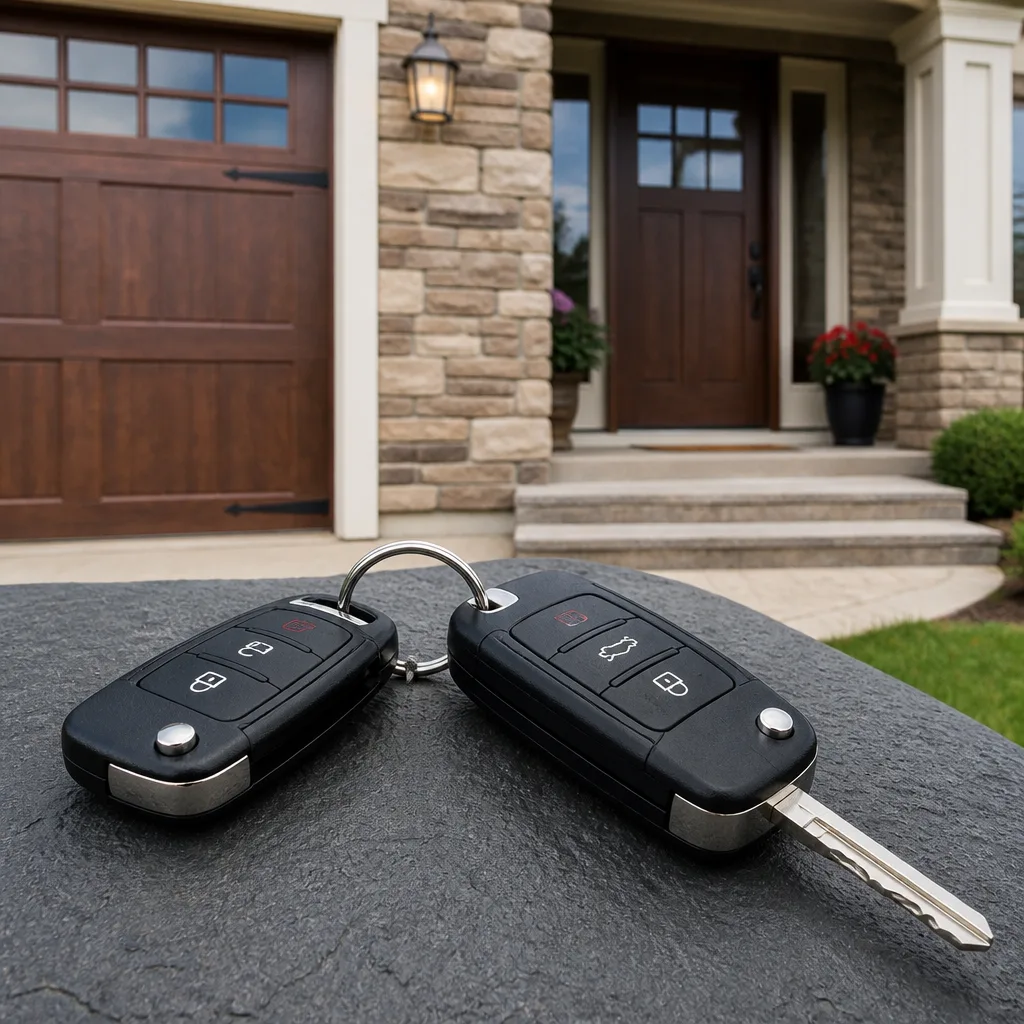 Car keys & fobs
Non-destructive entry first, always - and we re-key Schlage, Kwikset, and Baldwin locks on the spot while you watch
You get a price before we start. It does not change when we arrive. No surprises.
Get your free estimateThe Complete Car Key Replacement Guide for Chicago Homeowners
Here’s a number most Chicago drivers never think about until it’s too late: a dealership-programmed smart key can take 3 to 5 business days to arrive and program. That’s up to a full work week without a vehicle. In January, when the wind off the lake cuts through everything, that delay isn’t an inconvenience. It’s a hazard. This guide walks you through every variable that determines what your car key replacement will cost, how long it takes, and which provider in Chicago can actually handle your specific key type. By the time you finish reading, you’ll know exactly what questions to ask before you spend a dollar.
Styles & brands we work with
Quick Answer
Car key replacement in Chicago costs between $90 and $450 depending on your key type: basic cut keys run $90 to $150, transponder keys $120 to $250, and smart proximity keys $250 to $450 or more. A mobile locksmith can cut and program most keys on-site in under an hour, while dealerships typically require a tow and a 3 to 5 day wait. You’ll need proof of ownership, your VIN, and in most cases the vehicle present for programming.
Table of Contents
- How to Identify What Kind of Key You Have
- Why Chicago Winters Make Key Replacement Urgent
- The Real Cost Comparison: Dealer vs. Auto Store vs. Locksmith
- VIN-Based Cutting vs. On-Site Programming: What It Actually Means
- What Documentation You’ll Need Before Anyone Cuts a Key
- How On-Site Programming Works, Step by Step
- Common Mistakes to Avoid
- When to Call a Professional
- Frequently Asked Questions
- The Bottom Line
How to Identify What Kind of Key You Have
Your replacement cost is determined almost entirely by what’s inside your key. Chicago drivers call us every day assuming they have a “regular key” when they actually have a transponder. Knowing your key type before you call saves you from sticker shock and helps the locksmith bring the right equipment. Here’s the breakdown by vehicle era.
Basic Cut Keys (Pre-1996 Vehicles)
If your vehicle predates 1996, you likely have a plain metal key with no electronics. These are cut on a standard key machine and cost the least to replace, usually $90 to $150 including the key blank and cutting labor. No programming is required. Most locksmiths in Chicago carry universal blanks for older Ford, GM, Honda, and Toyota models, so a replacement can often be completed in 30 minutes at your location.
Transponder Keys (1996 – 2010)
Vehicles from this era have a small chip embedded in the plastic head of the key. The chip transmits a unique code to the ignition when you turn the key. Without the correct code, the engine will crank but not start. Transponder keys require both physical cutting and electronic programming, which is why they cost more: typically $120 to $250 in Chicago. The programming step requires a diagnostic tool connected to your vehicle’s OBD-II port, which is why a mobile locksmith needs your vehicle present.
Remote Key Fobs (2010 – 2017)
Many vehicles from this era use a separate key blade and a remote fob for lock/unlock functions. The key itself may be a transponder, or it may be a basic cut key. The fob controls door locks, trunk release, and sometimes remote start. Replacing just the fob is usually cheaper than replacing the key, but if you’ve lost both, expect to pay $180 to $300 for the pair. Some fobs require dealer-level software to program; a qualified locksmith with the right diagnostic equipment can often bypass this.
Smart Proximity Keys (2017 – Present)
Smart keys, sometimes called proximity keys or keyless entry fobs, communicate with your vehicle wirelessly. The key never enters an ignition cylinder. It stays in your pocket or bag, and the vehicle detects its presence when you touch the door handle or press the start button. Smart keys are the most expensive to replace because they require both advanced programming and sometimes flashing the vehicle’s onboard computer. In Chicago, expect $250 to $450 or more depending on the make and model. Some European and luxury models exceed $500.
For a deeper look at how our team handles every key type, see our Car Key Replacement in Chicago service page.
Why Chicago Winters Make Key Replacement Urgent
Chicago’s winter does more than make you cold. It changes the math on every key replacement decision. When temperatures drop below 20 degrees and the windchill off Lake Michigan hits negative numbers, a vehicle without a working key is a legitimate safety issue. You can’t warm up in a car you can’t start. You can’t charge a phone in it. You can’t wait out a tow truck inside it.
Dealership delays hit harder here than almost anywhere else in the country. A 3 to 5 day wait for a programmed key is tolerable in Phoenix. It’s not tolerable when you’re standing on a side street in Bridgeport or clearing snow off a curb in Lincoln Square, waiting for a ride that may take 45 minutes to arrive. The urgency of Chicago key replacement is why mobile locksmith service matters so much: the work comes to you, and it’s done before your hands go numb.
Cold weather also affects key hardware. Plastic key fobs become brittle in sub-zero temperatures and crack more easily when dropped. Older transponder keys, especially those stored in unheated garages, can develop intermittent failures in cold weather that surface at the worst possible moment. If your key has been acting up all summer, a Chicago winter will finish it off. That’s not anecdote. In our experience, the first serious cold snap of every season brings a measurable spike in key failure calls.
Parking adds another layer. Chicago’s residential parking is tight. If your car is parked in a permit zone, a private garage, or a spot where you’re vulnerable to ticketing, you need the key replaced before you can move the vehicle. That means you need a locksmith who comes to the parking spot, not a dealership that requires you to tow the car to them.
The Real Cost Comparison: Dealer vs. Auto Store vs. Locksmith
Here’s where the decision tree gets real. The price you pay depends on who you call first. Our DIY vs Professional Locksmith: The Chicago Homeowner’s Decision Guide covers this in depth, but here’s the honest comparison for Chicago drivers, based on current market rates and our own service experience.
| Key Type | Dealership | Big-Box Auto Store | Mobile Locksmith |
|---|---|---|---|
| Basic Cut Key | $150 – $250 | $90 – $160 | $90 – $150 |
| Transponder Key | $200 – $400 | $120 – $250 | $120 – $250 |
| Remote Key Fob | $250 – $500 | $150 – $300 | $180 – $300 |
| Smart Proximity Key | $350 – $700 | $250 – $450 | $250 – $450 |
What the Table Doesn’t Show
Dealership pricing looks competitive until you factor in the hidden costs. A dealership requires your vehicle to be physically present for programming. If your car won’t start because the key is lost, you’re paying a tow truck $100 to $200 just to get it to the dealer. Then you’re waiting days. Then you may pay a separate programming labor fee on top of the key cost. The total can easily exceed $700 for a smart key.
Big-box auto stores like AutoZone or O’Reilly sell key blanks and cutting services, but they generally cannot program transponder or smart keys. They’ll sell you the blank and point you to someone else for programming. That’s fine if you have a basic key. It’s a dead end if you have a 2019 Civic.
A mobile locksmith brings cutting and programming equipment to your location. You pay one price that includes the key, the cutting, the programming, and the service call. No tow. No second appointment. No waiting. And from Valor Locksmith, the price quoted on the phone is the price on the invoice, with no call-out surcharge added on arrival.
VIN-Based Cutting vs. On-Site Programming: What It Actually Means
When a locksmith asks for your VIN, they’re not running a background check or being difficult. The Vehicle Identification Number, usually visible through the windshield on the driver’s side dashboard or on the door jamb sticker, is the code that allows a locksmith to look up your vehicle’s exact key specifications from the manufacturer’s database. Here’s what happens with it.
Step 1: Key Code Retrieval
- The locksmith enters your VIN into a secure key code database.
- The database returns the factory key code specific to your vehicle.
- This code tells the locksmith the exact depth and spacing of each cut on your key blade.
- For most vehicles, this eliminates the need to trace or decode your old key at all.
Step 2: Key Cutting
The key code is loaded into a precision key cutting machine. This machine cuts your new key blade to the exact factory specifications, matching what the original key looked like when your vehicle left the assembly line. This matters because a key cut from VIN code works the door locks, the trunk, and the ignition, while a key traced from a worn copy may only work the ignition.
Step 3: Programming
If your key has a chip, the locksmith connects a diagnostic programmer to your vehicle’s OBD-II port, typically located under the dashboard on the driver’s side. The programmer communicates with the vehicle’s immobilizer system and adds your new key’s chip code to the list of recognized keys. This step takes 15 to 30 minutes and requires the vehicle to be present with a working battery.
VIN-based cutting is standard practice for professional locksmiths. It’s also why you should never pay for a key that someone traces from a worn copy. A worn copy duplicates the wear patterns, meaning your new key starts out with the same problems the old one had. VIN-based cutting gives you a key that works like the original.
What Documentation You’ll Need Before Anyone Cuts a Key
This is the part most Chicago drivers don’t expect. You cannot walk into any reputable locksmith or dealership and get a key cut for a car you can’t prove you own. That protocol exists to prevent vehicle theft, and any provider who skips it is cutting corners. Here’s what you’ll need.
Proof of Ownership
- Vehicle title in your name, or
- Current vehicle registration matching your ID, or
- Valid lease agreement if the vehicle is leased
Personal Identification
- Valid state driver’s license or state ID
- The address on your ID does not need to match the registration address, but the name must match the ownership document
Vehicle Identification Number (VIN)
You’ll need the VIN, which is visible through the windshield on the driver’s side dashboard. If you don’t have access to the vehicle because the key is locked inside or lost, check your insurance card, registration, or loan paperwork; the VIN is printed on all of them.
For Company Vehicles
If the vehicle is owned by a business, you need a letter of authorization on company letterhead, signed by an officer, along with the title or registration. A business card is not sufficient. The letter must state that you are authorized to order replacement keys for that specific vehicle.
In Chicago, where vehicle theft is a persistent concern, we take this seriously. Anyone who cuts a key without verifying ownership is not doing you a favor. They’re doing something worse. At Valor Locksmith, we verify ownership on every key replacement job, no exceptions, before a single cut is made.
How On-Site Programming Works, Step by Step
This is what actually happens when a mobile locksmith arrives at your location in Chicago. Understanding the sequence helps you know what to expect and what reasonable service looks like.
- Verification: The technician checks your ID and proof of ownership, then records the VIN from the dashboard or door jamb. This takes about two minutes.
- Key Code Lookup: Using the VIN, the technician pulls your factory key code from the database. This determines the precise cut pattern for your new key blank.
- Blank Selection: The technician selects the correct key blank for your specific year, make, and model. Using the wrong blank means the key won’t even slide into the lock cylinder, so this step matters more than it looks.
- Cutting: The blank is loaded into the portable cutting machine and cut to factory specifications. This takes under five minutes.
- Programming: The technician connects the diagnostic programmer to the OBD-II port and follows the manufacturer’s protocol to register the new key chip or fob with the vehicle’s immobilizer. This takes 15 to 30 minutes depending on the vehicle.
- Testing: The technician tests the new key in the door lock, the ignition, and the remote functions if applicable. You’ll be asked to test everything yourself before the technician leaves.
- Payment and Documentation: You pay the quoted price, receive a receipt, and get any temporary codes or PINs explained if applicable.
Total time on site: typically 30 to 60 minutes. Compare that to the dealership process: tow, drop-off, wait, return, pickup. You lose a day even if everything goes perfectly.
Our locksmiths work across a range of hardware that few Chicago shops are certified to service, including high-security brands like Medeco, Mul-T-Lock, and Schlage. That technical depth matters when a standard key replacement reveals a deeper issue with your vehicle’s lock cylinder or ignition.
Common Mistakes to Avoid
- Calling the dealership first without checking the timeline. Chicago dealerships routinely tell customers “a few days” for programmed keys. That’s a few days without a vehicle in a city where public transit doesn’t reach every neighborhood efficiently. Call a mobile locksmith first and ask if your key type can be handled on-site. You’ll usually get a yes.
- Buying a cheap replacement key online and expecting anyone to program it. We see this weekly. Online key blanks from third-party sellers are often incompatible chips that cannot be programmed to your vehicle. You save $20 and then pay full price twice when the key fails.
- Not having the vehicle present for programming. Transponder and smart keys require the physical vehicle for programming. If you call a locksmith and they say they can program your key without the vehicle, that’s a red flag. Hang up.
- Assuming your roadside assistance covers key replacement. Most Chicago roadside assistance plans cover lockout and towing, not key cutting or programming. They’ll tow you to a dealership, but they won’t pay for the key. That’s how people end up with a $700 bill for a transponder key.
- Replacing the whole lock cylinder when only the key is lost. Some Chicago shops push ignition cylinder replacement because it’s a bigger job. A lost key rarely requires a new cylinder. A VIN-cut key solves the problem in most cases. If someone tells you the cylinder needs replacing, get a second opinion from a locksmith who does rekeying and key cutting in-house.
- Ignoring a key that works “sometimes.” In Chicago’s temperature swings, a failing transponder chip or worn key blade will eventually strand you. If your key works only in the summer or only when you hold it at a certain angle, replace it now, before the next cold snap.
- Forgetting the spare. After you replace one key, make a second. The cost of a second key is lower when the locksmith is already on-site and already has the key code. A second programmed key is cheap insurance against doing this whole process again.
When to Call a Professional
Some key problems are obvious. You lost your only key. You locked it in your car. The key snapped in the ignition. Those are emergency calls. But there are quieter signals that you need professional help before the emergency happens. A key that needs jiggling to work is a warning. A fob that works only from three feet away is a warning. A transponder key that sometimes fails to start the engine is a warning. All of these are fixable today. Waiting turns a $150 key replacement into a $300 emergency call with towing.
Valor Locksmith offers free estimates in Chicago, call (877) 870-5926. We’ll tell you what your key type costs to replace, what documentation you need, and whether we can handle it on-site. No dispatch fee. No pressure. Just the information you need to make the call.
For urgent lock and key issues, see our Emergency Locksmith in Chicago page. If your security concerns go beyond the vehicle, especially after a key loss, our Rekey Locks in Chicago service covers residential and commercial locks without full hardware replacement.
Frequently Asked Questions
Car key replacement in Chicago runs $90 to $450 for most vehicles. Basic cut keys cost $90 to $150, transponder keys $120 to $250, and smart proximity keys $250 to $450 or more. The final price depends on your vehicle’s year, make, and model, and whether the key requires programming. Call (877) 870-5926 for an exact quote on your specific vehicle; estimates are free.
Yes. A qualified locksmith can cut a new key using your vehicle’s VIN, which provides the factory key code. No original key is required. You will need proof of ownership and the vehicle present for programming if your key has a transponder chip or smart function.
Most mobile locksmith key replacements take 30 to 60 minutes on-site in Chicago. Basic cut keys are fastest at 20 to 30 minutes. Transponder and smart key programming adds 15 to 30 minutes. Dealership replacements, by contrast, typically take 3 to 5 business days plus towing time.
You need proof of ownership, typically your vehicle title or current registration, plus a valid state ID matching the name on the ownership document. For company vehicles, you also need a signed authorization letter on company letterhead. Any reputable provider will ask for these before cutting a key.
Yes. At Valor Locksmith, the price quoted on the phone is the price on the invoice. There is no call-out surcharge added on arrival, no hidden programming fee, and no bait pricing. You’ll know the full cost before anyone is dispatched. Call (877) 870-5926 for a free quote.
A qualified locksmith can program transponder keys, remote fobs, and smart proximity keys. The equipment required is advanced but portable, and many independent locksmiths in Chicago carry full diagnostic programmers. Ask specifically whether the locksmith handles your vehicle’s make and model before you book.
The Bottom Line
Car key replacement in Chicago is a solvable problem when you understand your key type and call the right provider first. Basic keys are cheap and fast. Transponder and smart keys cost more but are still handled on-site by a qualified mobile locksmith in under an hour. The dealership alternative, a multi-day wait plus towing, is almost never the better option. Verify ownership, ask for the VIN-based cut, confirm the exact price on the phone, and you’ll never overpay for a car key again. Valor shows up.
For more on our full range of services, visit Valor Locksmith home.
Written by the team at Valor Locksmith, serving Chicago since 2013. For more guides & resources, visit our blog.