
Last updated October 31, 2026
 House lockouts
 Re-keying
 Deadbolt upgrades
 Smart locks
 Schlage
 Kwikset
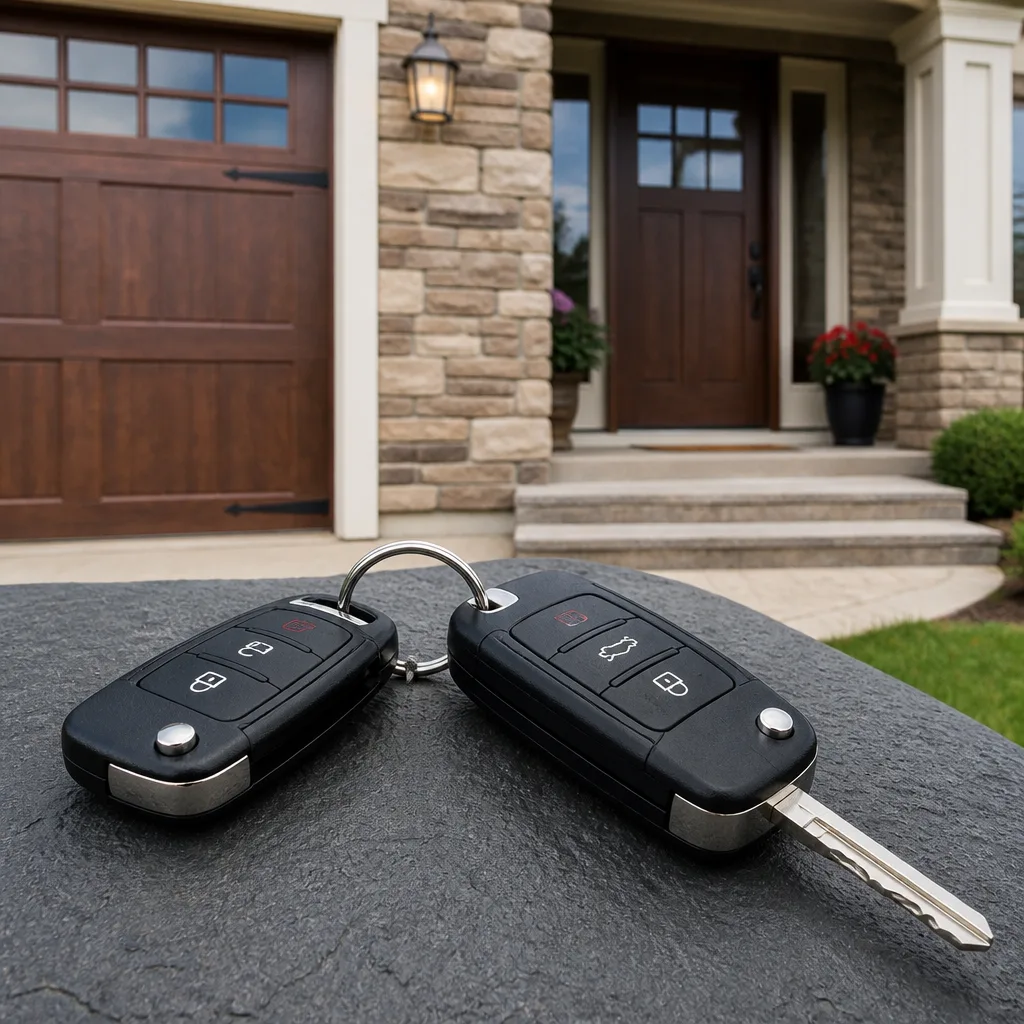 Car keys & fobs
Non-destructive entry first, always - and we re-key Schlage, Kwikset, and Baldwin locks on the spot while you watch
You get a price before we start. It does not change when we arrive. No surprises.
Get your free estimateCar Key Replacement Troubleshooting: Common Problems and How to Fix Them
Here’s a number that should stop you cold: a dead key fob battery produces nearly identical symptoms to a failed transponder chip, and every year drivers across Chicago pay for complete key replacements when a $4 CR2032 cell was the only problem. Walk through any parking garage in the Loop or a side street in Wicker Park and you’ll find someone holding a key fob to their chin, pressing unlock, hoping that trick works one more time. This guide gives you the exact diagnostic sequence professional locksmiths use before cutting or programming anything. You’ll learn how to separate battery failure from chip failure, what actually happens when a new key won’t start your car, and how to tell whether the problem is your key, your car, or the last person who touched either.
Styles & brands we work with
Quick Answer
Most car key replacement problems trace to three causes: a dead fob battery, a transponder chip that lost programming sync, or a mechanical key cut that’s slightly off. Start with the battery, then test whether the chip is being recognized, then inspect the physical cut. If the key turns in the ignition but the engine won’t crank, it’s a transponder or immobilizer issue, not a mechanical one, and that’s a programming fix rather than a new key.
Table of Contents
- The Battery-First Rule: Why Your Key Might Not Be Dead at All
- New Key Won’t Start the Car: What Resyncing and Reprogramming Actually Fix
- Locksmith Programming Errors vs. Dealer ECU Issues: How to Tell Who Made the Mistake
- Transponder Desync After a Dead Battery: Why Jump-Starts Kill Keys
- The Intermittent Key: The Damaged Antenna Ring Problem Nobody Diagnoses
- Chicago-Specific Car Key Problems: Cold Snap Stress, Salt, and Urban Wear
- Why the Cut Matters More Than the Programming
- Common Mistakes to Avoid
- When to Call a Professional
- Frequently Asked Questions
- The Bottom Line
The Battery-First Rule: Why Your Key Might Not Be Dead at All
Before you call anyone, before you buy anything, before you convince yourself the fob is finished, replace the battery. In our experience working car key issues across Chicago, roughly four out of ten “dead” fobs we see are just dead batteries. The math matters because a battery costs a few dollars at any hardware store in Lincoln Square or Hyde Park, while a replacement fob from a dealer runs $200 to $400 depending on make and model.
Here’s the diagnostic sequence we use on every service call, and it’s the same one you should run at home:
- Test the obvious first. Press every button on the fob. If the car responds intermittently, if the LED on the fob doesn’t light, or if the range has shrunk dramatically, that’s a battery voltage problem before it’s anything else.
- Open the fob. Most fobs split with a small flathead screwdriver along a seam. Some use a hidden release button. Look for the battery type stamped on the old cell, usually CR2032 or CR2025 on modern cars, sometimes CR1620 on older models.
- Check voltage with a multimeter if you have one. A fresh CR2032 reads 3.3 volts. At 2.9 volts, most fobs still transmit. Below 2.7 volts, range collapses and intermittent failure starts. Anything under 2.5 volts is functionally dead.
- Replace and retest. Install the new battery with correct polarity, snap the fob shut, and test all buttons from the same distance you’d normally stand.
A caveat that saves people real money: if a new battery doesn’t change anything, don’t try a second new battery. That’s the point where you stop guessing. A transponder chip failure and a battery failure overlap in symptoms because both cause the car to ignore the key, but a chip problem won’t improve with fresh power because the chip isn’t powered by the fob battery at all. Proximity keys and push-button-start vehicles are different, those chips are passive and the fob battery matters. Traditional turn-key ignitions with a chip in the key head use no battery for the chip, the car’s antenna ring powers it by induction. So a dead battery in a fob that unlocks doors and a dead chip in a key that starts the car are two separate systems. Knowing which one failed is the entire diagnostic game.
For Chicago drivers specifically, cold weather drains fob batteries faster. A battery that reads 2.9 volts in October might read 2.6 volts during a February cold snap on Lake Shore Drive, and that drop is enough to kill range and triggers the “why doesn’t my key work anymore” call we see every winter, especially from drivers in neighborhoods like Rogers Park and Beverly where street parking means more time walking up to a cold car and pressing unlock.
If you’ve swapped the battery and the fob still doesn’t work, or if you have a traditional turn-key ignition and the car won’t recognize the key, you’re past the free fix. That’s when to call a locksmith who handles car key replacement in Chicago, because the next steps involve diagnostic equipment and programming tools, not parts-store batteries.
New Key Won’t Start the Car: What Resyncing and Reprogramming Actually Fix
You paid for a replacement key, the locksmith or dealer handed it to you, you put it in the ignition, and nothing. Or the dash lights up but the engine turns over and immediately dies. Or a security light flashes. This is the most common post-replacement complaint we hear from drivers all over Chicago, from Bronzeville to Portage Park, and the cause is almost never a defective key.
A freshly cut key can fail to start a vehicle for three reasons, and only one of them is a cutting problem:
- The key was cut but not programmed. On modern cars, the physical cut is only half the key. The transponder chip inside the key head must be programmed to the car’s immobilizer. A key that turns the ignition but won’t start the car, accompanied by a blinking security light, is a cut but unprogrammed or incorrectly programmed key.
- The key was programmed but not synced. Some vehicles require a resync procedure after programming, where the new key must be cycled through the ignition a specific number of times or paired with the fob functions. If the remote lock buttons don’t work but the key starts the car, that’s a sync issue, and a quick procedure fixes it.
- The cut is slightly off. This happens more often than drivers realize. A key cut from a worn original, a bad code, or a key machine that’s out of calibration can produce a key that inserts but binds in the cylinder, turns partially, or only works in one direction. For this, the cut needs to be corrected or the key recut from the vehicle’s key code instead of the worn original.
What resyncing and reprogramming actually fix depends on where the communication broke. Programming pairs the car with the transponder chip. Resyncing realigns the rolling codes the fob and car exchange so they’re counting in the same sequence. Chrome and Ford models from the last decade often need both after a replacement key, and skipping the resync step is why some “bad” keys work after a second visit when really they just needed the reset. This is also why cheap online keys that arrive uncut and unprogrammed rarely work for drivers who don’t have programming equipment, the key is only as good as the programming step. For more detail, see our Choosing the Right Locksmith Brand: A Buyer’s Guide for Chicago.
In our experience on Chicago streets, the key that arrives already cut from an online code service fails at one of three points: the cut is wrong, the chip isn’t compatible, or the customer’s car has an aftermarket alarm that blocks programming. When we’re called out after a failed self-programming attempt, we often find the car’s security system has locked out new key registration entirely, and it takes a diagnostic tool to clear that lockout before anything else can work. This is one of the reasons we recommend Valor Locksmith home services for a second opinion, because we carry the programming equipment that most drivers don’t.
Locksmith Programming Errors vs. Dealer ECU Issues: How to Tell Who Made the Mistake
Nobody wants to accuse a professional of making an error, but when a replacement key doesn’t work after a paid service, the driver needs to know where the problem lives. We’ve been called to fix keys that were “just replaced” and found the issue on either side of the equation, and the diagnostic path is usually clear.
Here’s how to separate a locksmith programming error from a vehicle computer problem:
- If the key turns the ignition but the car won’t start, and the security light flashes, the key likely wasn’t programmed correctly or at all. This is the locksmith or dealer’s step to fix. A properly programmed transponder key on a correctly functioning car starts the engine every time.
- If the key starts the car but the remote buttons don’t work, the transponder is programmed but the fob sync wasn’t completed. Also a fixable service error, not a car problem.
- If no key starts the car, including the original that worked before, the problem is the car’s immobilizer or ECU, not the key. This points to a vehicle-side issue like a failed antenna ring, a blown fuse on the immobilizer circuit, or an ECU that lost its key programming entirely.
- If the key works sometimes but not other times, check the antenna ring and ignition cylinder first, not the key. More on this below.
The distinction matters because it determines who should fix it. Dealer ECU issues require a dealer or a well-equipped automotive locksmith because they involve reflashing vehicle computers. Locksmith programming errors require the locksmith to redo their work, and any competent shop should correct that at no charge. If a driver in Chicago has a key replaced somewhere and it doesn’t work, our advice is to call the provider first and describe exactly what the key does and doesn’t do. A good shop wants to fix it. A shop that argues, deflects, or blames the car, especially when the old key worked fine before they touched anything, is telling you something about their process.
We see this most often after drivers purchase keys from online sellers and then pay a mobile locksmith to cut and program them. The key arrives, the locksmith works, and the result is a key that won’t start the car. The locksmith blames the key. The seller blames the locksmith. The driver is stuck in the middle with a car that won’t start. This is why we recommend getting the key and the programming from one shop, one call, one accountability chain. When something goes wrong, there’s no question who makes it right.
Transponder Desync After a Dead Car Battery: Why Jump-Starts Kill Keys
A dead car battery is annoying enough. What’s worse is when you jump-start the car, get it running, and discover your key no longer works. We hear this exact story from Chicago drivers every winter, especially after a deep freeze in January when batteries across the city give up at once and every tow truck and jumper cable in the metro area is busy.
Here’s what’s happening. Your car’s immobilizer stores the transponder code from each programmed key in non-volatile memory, so it shouldn’t lose the pairing from a dead battery. But some vehicles are more fragile. When the car battery drops below a certain voltage, the ECU can glitch or partially reset, and one of the systems that gets confused is the immobilizer’s key registry. The result is a car that cranks, starts, and then immediately dies, with the security light flashing on the dash, because the car no longer recognizes the very key that worked this morning.
The fix, if this happens, is usually a resync or reprogram, not a new key. The key itself is still fine. The car forgot it. The repair sequence involves a diagnostic tool that can access the immobilizer, clear the error, and re-pair the existing keys. This is a job for a professional with the right equipment, but it’s a quick one, typically under an hour, and it saves the driver from buying a whole new key they didn’t need.
Jump-starting can also blow fuses on some vehicles, and the immobilizer circuit shares a fuse with other components. If your key died after a jump-start, check the fuse box first. The fuse diagram in your owner’s manual will point you to the immobilizer or security fuse, and a blown fuse there is a $3 fix instead of a $150 service call. This is the kind of thing we check before plugging in diagnostic equipment, because it’s faster and it’s what we’d want someone to do for us.
For Chicago drivers, the takeaway is practical. If your car battery dies and your key stops working after the jump, don’t panic, and don’t assume the key is ruined. There’s a good chance the immobilizer just needs a re-pair. Call a locksmith who handles automotive diagnostics, like the team behind emergency locksmith service in Chicago, and describe exactly what happened. The sequence of events, dead battery, jump-start, key failure, tells a professional a lot about where to start looking.
The Intermittent Key: The Damaged Antenna Ring Problem Nobody Diagnoses
Here’s a scenario we’ve seen repeatedly in Chicago: a driver replaces a key, and the new key works, but only sometimes. Some mornings it starts the car perfectly. Other times, nothing. The driver assumes the key is bad, sends it back, gets another one, and the same thing happens. After two or three keys, they’re frustrated and $200 poorer, and the real problem was never the key at all.
The answer, in most of these cases, is a damaged immobilizer antenna ring. This is the coil that sits around the ignition cylinder and reads the transponder chip in your key. When it’s damaged, loose, or corroded, it reads the key intermittently, which means the car starts intermittently, which means the driver blames the key because that’s the part they just replaced. But the key was never the failure point.
Signs of a failing antenna ring include:
- The car starts fine sometimes and refuses to start other times, with no pattern you can identify
- Jiggling the key or repositioning it in the ignition makes the car start
- The security light stays on or flashes even with a working key
- Multiple replacement keys all show the same intermittent behavior
The antenna ring can fail for a few reasons. Physical wear from years of key insertion and removal. Corrosion from moisture exposure. Damage from a heavy keychain pulling down on the ignition cylinder, which flexes the ring and eventually breaks a wire inside. The heavy keychain failure is especially common, and we’ve seen it lead to full ignition cylinder replacement because the damage from the weight extended beyond the antenna ring.
The repair involves replacing the antenna ring, and in some cases the ignition cylinder assembly, then re-syncing the existing keys. The keys don’t need to be replaced. This is the kind of diagnosis that separates a parts-swapper from a technician. A parts-swapper says “bad key, buy another one.” A technician sees the pattern, suspects the ring, and tests it before selling anything. If you’ve replaced a key and it still works only sometimes, ask whoever takes the next look to check the antenna ring before cutting anything else.
Chicago-Specific Car Key Problems: Cold Snap Stress, Salt, and Urban Wear
Car key issues in Chicago follow patterns that drivers in warmer, drier, less dense cities don’t see as often. The same key that works fine in Phoenix or San Diego has a different failure profile here, and knowing the local failure modes helps you diagnose faster.
Cold snap stress. When the temperature drops, metal contracts. Lock cylinders tighten. Keys that worked in September bind in January. The fix is usually lubrication first, not replacement. A small amount of graphite or a lock-specific lubricant in the cylinder, then gentle key cycling, resolves many seasonal stiffness complaints. But plastic key heads also get brittle in extreme cold, and a key head that cracks during a polar vortex is a replacement job.
Road salt and corrosion. Chicago winters coat everything in salt, and that salt works into door lock cylinders and ignition switches. Corrosion inside a cylinder doesn’t just make the mechanical key bind, it can also interfere with the electrical contacts in the ignition switch, creating intermittent starting issues that mimic transponder problems. Drivers who park outdoors in neighborhoods like Avondale or South Shore, and who don’t have covered parking, see this more than garage-parked drivers.
Urban wear and tear. City driving means more ignition cycles per day than suburban driving. More stop-and-go, more errands, more times the key goes in and out of the ignition. That mechanical wear adds up faster, and ignition cylinders in high-mileage city cars wear out sooner than the same vehicle driven on highways. A worn cylinder can damage a new key, and a worn key can damage a new cylinder. When both are worn, replacement of both is often the right call.
Parallel parking and key proximity. Chicago street parking means your car sits closer to your living space, which means your key’s proximity sensor, if you have push-button start, may be constantly pinging the car. This drains fob batteries faster than driveway-parked cars in the suburbs. Chicago drivers with push-button start and street parking should replace fob batteries annually, before the cold hits, rather than waiting for failure.
We also see higher rates of aftermarket alarm complications in Chicago because of the city’s history of vehicle theft. Many used cars sold here have alarm systems installed by previous owners, and those systems can interfere with key programming, block immobilizer communication, or cause draining issues that kill car batteries and trigger the desync problem described above. When a replacement key won’t program and the car has an aftermarket alarm, the alarm is often the blocker.
Why the Cut Matters More Than the Programming
Most of the car key conversation focuses on chips, transponders, and programming, and that’s understandable, it’s the mysterious part. But the mechanical cut of the key is just as important, and in some ways more so, because a bad cut can damage the ignition cylinder and turn a $200 key replacement into an $800 cylinder replacement.
A properly cut key has precise depths on each cut position, and those depths must match the wafers or pins inside the ignition cylinder. Get one cut depth off by a few thousandths of an inch, and the key might still insert but not turn. Off by more, and the key binds. Force it, and the cylinder takes damage. This is why key cutting is a technical skill, not just a machine operation, and why the quality of the key machine and the skill of the operator both matter.
Here’s what experienced locksmiths do differently:
- Cut from the vehicle’s key code when possible. The key code is the manufacturer’s original specification for that exact ignition cylinder. Cutting from code produces a key that’s correct to factory spec, not a copy of a worn key. Copies of copies get worse each generation, and by the third copy, the key often won’t work at all.
- Use depth and space calibration on the cutting machine. Key machines need calibration, and a machine that’s out of calibration produces keys that are consistently wrong in one direction. This is invisible to the customer but obvious in the cut quality.
- Dress the key after cutting. A fresh cut key has sharp edges and burrs from the cutting process. A good locksmith deburrs the key, which makes it insert and turn more smoothly and prevents it from damaging the cylinder over time.
- Test the cut before programming. On cars where the mechanical key and the transponder chip are separate concerns, the cut gets tested in the cylinder first. If the cut is wrong, there’s no point programming the chip. Fix the cut, then program.
For drivers in Chicago, the practical advice is this: if you’re getting a replacement key, ask whether it will be cut from code or copied from your existing key. Cutting from code costs a little more but produces a better, longer-lasting key, and it’s the standard we follow on every automotive job, including car key replacement in Chicago. If the shop doesn’t know what “cutting from code” means, keep looking.
Common Mistakes to Avoid
- Replacing the fob instead of the battery. The most expensive mistake on this list. A $4 battery fixes what a $200 fob replacement doesn’t need to fix. Always test the battery first, even if the fob seems completely dead.
- Buying an uncut, unprogrammed key online and expecting it to work. Online keys arrive as blanks. They need professional cutting and programming, and not every locksmith will work with random online keys because of the failure rate. Buy the key and the service together.
- Ignoring an intermittent key. An intermittent key is a warning sign, not a quirk. Whatever is failing, a loose antenna ring, a worn cylinder, a dying battery, it will fail completely, usually at the worst time. Address intermittent behavior before it strands you.
- Using a heavy keychain on a modern ignition. Heavy keychains pull on the ignition cylinder, wearing it out faster and damaging the antenna ring around it. Modern keys were designed to be carried alone or with one or two other keys, not as a keychain anchor.
- Assuming the key is dead after a jump-start. The desync problem described above is recoverable without a new key. Don’t buy a replacement before a professional has a chance to diagnose the immobilizer.
- Forcing a key that binds. If a key doesn’t turn smoothly, stop. Forcing it damages the cylinder, and the repair bill goes up fast. Lubricate first, then call a professional if binding continues.
- Going to a dealer for everything. Dealers charge more for keys and often have longer wait times. Independent automotive locksmiths in Chicago handle key cutting, programming, and emergency services, often same-day, and the good ones use the same equipment the dealers use.
When to Call a Professional
Some car key problems are DIY-fixable. A dead battery, a sticky lock cylinder, a fuse that blew during a jump-start, those are the free or cheap fixes. But when the battery is fresh and the key still won’t work, when the security light flashes, when multiple keys all fail the same way, or when the key works only sometimes and you can’t find the pattern, it’s time to stop guessing. Each failed guess wastes time and often makes the underlying problem worse. A professional with diagnostic equipment can read the vehicle’s immobilizer, test the key’s transponder, and identify the real failure in one visit. If you’re in Chicago, Valor Locksmith offers free estimates, call (877) 870-5926, and we’ll tell you over the phone what we think is wrong and what the fix will cost before anyone is dispatched. On-site, fast, and done right, that’s the standard.
Frequently Asked Questions
Intermittent car key failure is usually caused by a dying fob battery, a damaged immobilizer antenna ring around the ignition cylinder, or a worn ignition cylinder, not by the key itself. If a fresh battery doesn’t fix the problem, have a professional inspect the antenna ring before buying a new key. Call (877) 870-5926 and describe the pattern, we can usually narrow it down over the phone.
Car key replacement in Chicago typically runs $150 to $350 for a transponder key with programming, and $200 to $500 for a fob or push-button-start key, depending on the vehicle make and model. High-security European vehicles can run higher. The exact price depends on the key type, the car, and whether the key can be cut from the vehicle’s key code, and any reputable shop will quote the full price before starting work.
Yes, in many cases. Some vehicle keys require specialized programming procedures that dealers struggle with or charge heavily for, and independent locksmiths with the right diagnostic equipment can often program keys the dealer couldn’t, or at least identify why programming was failing. It depends on the vehicle and the equipment involved. We see this regularly in Chicago, and sometimes the fix is a different programming path, not a different key. For more guides & resources, explore our blog.
A jump-start can drop the vehicle’s voltage low enough to glitch the immobilizer’s key registry, causing the car to forget its keys. The keys themselves are usually fine. A professional can re-pair or reprogram the existing keys, which is faster and cheaper than replacing them. Check your fuses first, because the immobilizer circuit shares a fuse that can blow during a jump-start, and that’s a cheap fix.
Some older vehicles allow self-programming when you have two working keys, and some newer vehicles allow it through an app or a sequence of ignition cycles. Most modern cars require a professional diagnostic tool to program new keys. If the vehicle requires a tool, don’t attempt it without the right equipment, because multiple failed attempts can lock out the immobilizer and make the job harder. When in doubt, call a professional first.
Ask what equipment they use for programming, whether they cut keys from the vehicle’s key code or copy the existing key, and whether they’ll quote the full price before coming out. A qualified automotive locksmith will answer those questions directly. We’re happy to tell you what we’ll do, what it costs, and how long it’ll take before we ever dispatch a technician. For any car key question, call (877) 870-5926 for a free estimate.
The Bottom Line
Most car key replacement problems are diagnosed wrong because the failure gets blamed on the key when the actual failure lives somewhere else: in a battery, a fuse, an antenna ring, or the car’s immobilizer memory. The diagnostic sequence matters. Start with the cheapest possibility, the battery, and work upward from there. Don’t buy a replacement key before the current one is actually diagnosed. And when the fix requires programming or cylinder work, call someone who knows the difference between a key problem and a car problem. If you’re in Chicago and you’re stuck, rekeying may not be the answer, but we’ll tell you what is. One call for locks, keys, and rekeying.
Written by the team at Valor Locksmith, serving Chicago since 2013.